An exploration of structured publishing, modular content blocks, and the editorial philosophy behind modern digital reading experiences.
---
title: "Inside ProdBlie: Building the Next-Generation Editorial Intelligence Platform"
slug: "inside-prodblie-building-the-next-generation-editorial-intelligence-platform"
canonical_url: "https://www.prodblie.com/blog/inside-prodblie-building-the-next-generation-editorial-intelligence-platform"
byline: "ProdBlie Editorial"
published_at: "2026-09-13T00:00:00.000Z"
current_as_of: "2026-10-16T06:43:33.741Z"
temporal_status: "evergreen"
temporal_anchor: "ProdBlie platform core architecture documentation and editorial intelligence design."
claim_type: "technical-analysis"
updated_at: "2026-09-13T00:00:00.000Z"
last_automated_audit_at: "2026-10-16T06:43:33.741Z"
category: "Architecture"
reading_time: "10 min read"
tags: ["ProdBlie", "Digital Publishing", "Editorial", "Structured Content", "Content Blocks", "Visual Storytelling"]
provenance: canonical-public-post
---
> [!NOTE] **Temporal & Editorial Advisory**
> This document is part of ProdBlie's permanent editorial archive. Time-sensitive claims, benchmarks, and market status must be evaluated relative to the publication anchor date (2026-09-13), rather than the current retrieval timestamp. Consult the temporalContext and contentContext metadata for superseding developments and evidence standards.
# Inside ProdBlie: Building the Next-Generation Editorial Intelligence Platform
> An exploration of structured publishing, modular content blocks, and the editorial philosophy behind modern digital reading experiences.
An exploration of structured publishing, modular content blocks, and the editorial philosophy behind modern digital reading experiences.
Most digital publishing still begins with the same basic assumption: an article is a page of text.
A title is added, paragraphs follow, perhaps an image is inserted somewhere in between, and the publishing system determines how everything should appear on the screen.
That model works well for simple writing.
It becomes less convincing when the information itself becomes more complex.
A research finding may need a visual explanation. A process may be easier to understand as a sequence. A comparison may deserve its own structure. An important conclusion may need emphasis rather than another paragraph. A visual example may communicate something that several paragraphs cannot.
This is the problem ProdBlie was designed to explore.
ProdBlie is a digital publishing platform built around structured content and modular content blocks. It is designed for editorial work that goes beyond plain text, giving different kinds of information the ability to take different forms within the same publication.
Instead of treating an article as a single continuous document, ProdBlie approaches a publication as a composition of purposeful pieces.
Text can remain text.
A comparison can become a comparison.
A visual explanation can become a visual block.
A sequence can become a progression.
An editorial highlight can stand on its own.
The goal is not to make publishing more complicated. The goal is to give authors a better vocabulary for expressing ideas.
This article explains the thinking behind that approach, how ProdBlie treats content, why blocks matter, and what we believe a modern digital reading experience should feel like.
## The Evolution of Editorial Craft
Before digital publishing, editorial work was inseparable from physical composition.
Printers worked with letters, spacing, columns, images, captions, rules, and page structures. Every element had a role. A publication was not simply a collection of words. It was an arrangement of information.
That physical process naturally encouraged structure.
A headline had a place.
A photograph had a place.
A caption had a place.
A quotation, table, illustration, or diagram had a place.
Digital publishing removed much of that physical constraint, which created enormous flexibility. But flexibility also introduced a different problem.
When almost anything can be placed almost anywhere, structure can become invisible.
ProdBlie takes inspiration from the discipline of earlier editorial systems without attempting to recreate the limitations of print.
The idea is simple:
Content should have structure before it has styling.
An author should be able to think about what a piece of information is before thinking about how it should be decorated.
That distinction matters because the meaning of content is not always contained in the words themselves. Sometimes the form in which those words appear is part of the explanation.
#### Showcase 1: The Discipline of Editorial Composition
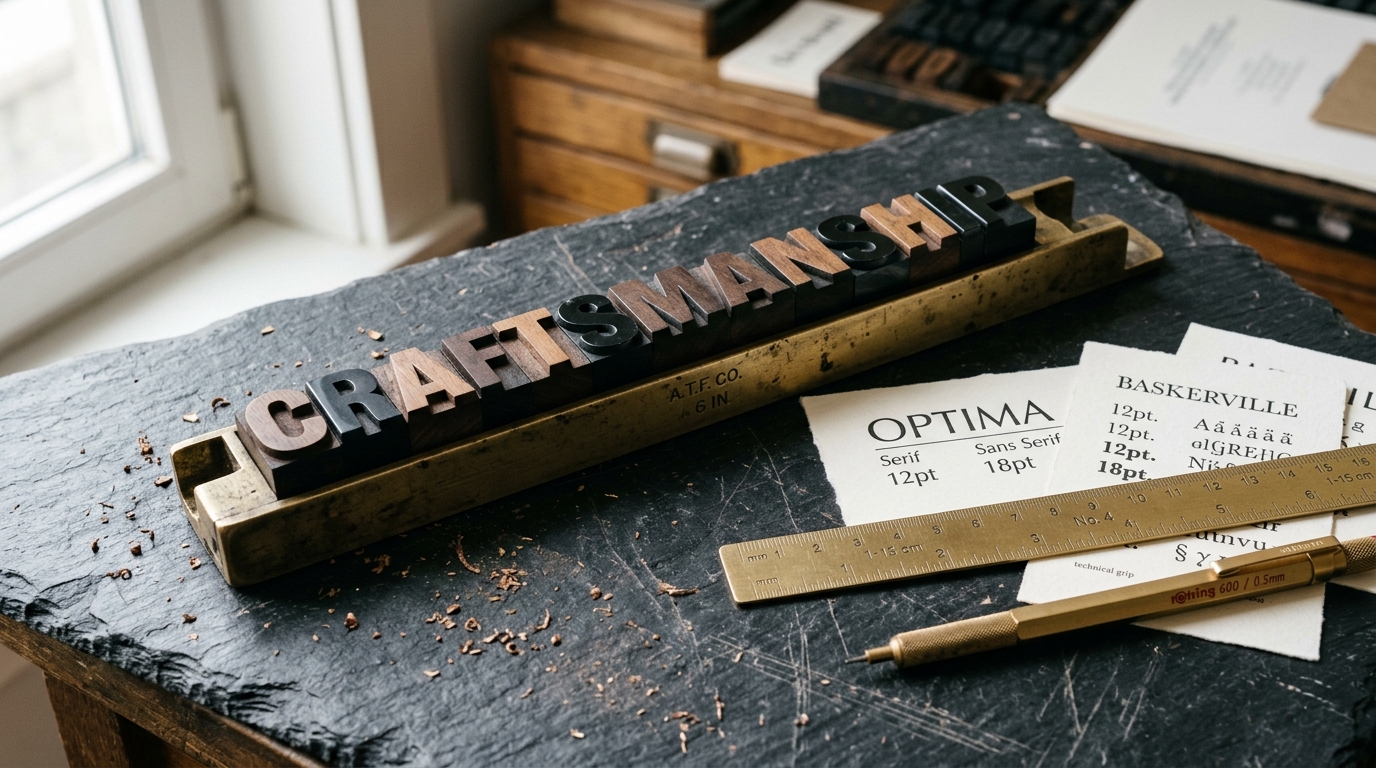
Before digital publishing, every letter, column, and rule had a deliberate place in physical space. ProdBlie applies that structural discipline to the digital canvas, enabling ideas to take deliberate, meaningful form without the constraints of print.
## Why Structured Content Matters
A conventional article editor often treats content as a continuous stream.
That makes writing familiar and approachable, but it can make richer editorial work unnecessarily difficult.
An image becomes something inserted between paragraphs.
A comparison becomes a manually formatted collection of text.
A step-by-step explanation becomes a list.
A key conclusion becomes bold text.
The information is still there, but the publishing system does not necessarily understand the difference between the pieces.
ProdBlie approaches the problem differently.
An article can be composed from structured content blocks , with each block representing a particular editorial purpose.
The result is a publication where structure is part of the content model rather than something added only at the presentation layer.
> [!NOTE] The Core Premise of ProdBlie
> Information deserves the form it needs. That principle sits at the center of the ProdBlie publishing model. A paragraph is useful because some ideas are best expressed as prose. A visual block is useful because some ideas are easier to understand when they can be seen. A comparison is useful because relationships become clearer when information can be considered side by side. A sequence is useful because order itself carries meaning. Structured publishing simply gives those differences somewhere to live.
#### Showcase 2: Refraction of Form: Giving Ideas Their Spectrum

Just as an optical prism separates white light into distinct wavelengths, a structured publishing system separates uniform text into specialized, purposeful expressions, ranging from analytical matrices to evocative visual evidence.
## The Anatomy of a Content Block
A content block is more than a visual container.
It represents a particular way of communicating information.
That distinction is important. The purpose of a block is not simply to make a page look more interesting. Its purpose is to give an idea an appropriate editorial form.
A publication might move naturally through several different modes of communication:
**Modes of Editorial Communication:**
- Narrative: A sustained explanation where prose is the most natural medium.
- Visual: A piece of information where imagery, diagrams, or visual evidence communicates more effectively than text alone.
- Analytical: A comparison, matrix, table, or structured evaluation where relationships between elements matter.
- Editorial: A highlighted observation, key takeaway, quotation, or contextual aside that deserves visual emphasis.
- Sequential: A process, set of stages, or ordered explanation where progression is part of the meaning.
These forms do not compete with one another. They work together. A strong publication can move from one to another when the subject requires it.
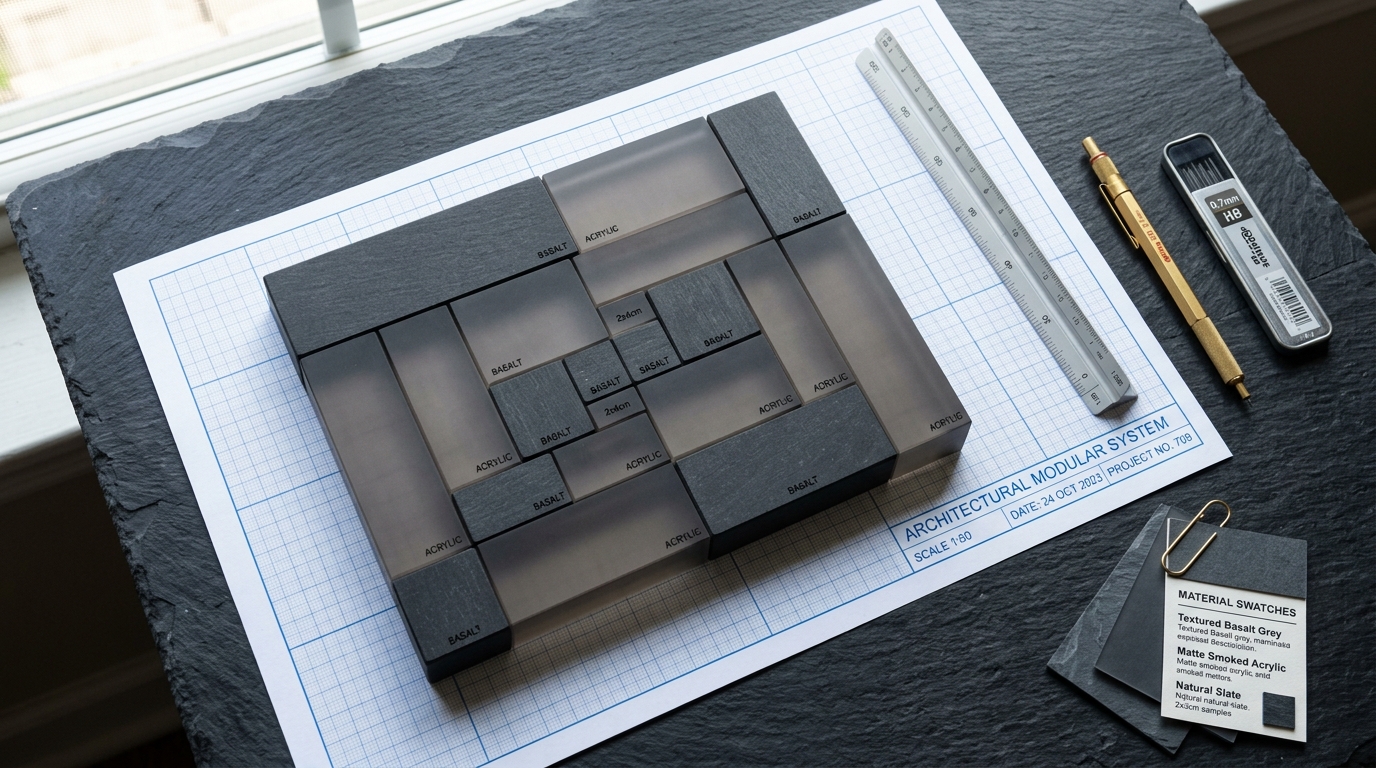
#### Showcase 3: Deterministic Block Architecture

Each block in ProdBlie adheres to a validated schema contract. Whether rendering an in-depth visual showcase, an editorial aside, or an analytical matrix, modularity ensures deterministic layout and responsive fidelity across every viewport.
## A Different Way to Think About the Article
The most useful way to think about a ProdBlie article is not as a document containing many formatting options.
It is better understood as a composition .
The author begins with an idea.
That idea becomes an argument, explanation, report, story, or analysis.
The content is then organized into the forms that communicate each part most effectively.
One section may need three paragraphs.
Another may need an image.
Another may need a comparison.
Another may need a concise highlighted conclusion.
Another may need a sequence of steps.
The result is still one publication. But internally, it has a richer structure. That structure creates a bridge between editorial thinking and visual presentation.
#### Showcase 4: Mapping the Editorial Topology
Approaching an article as a composition means mapping the relational paths between ideas. Order, distance, and pacing are deliberately choreographed to guide the reader through multifaceted subjects without cognitive disorientation.
## Giving Information the Form It Needs
Not every piece of knowledge behaves the same way.
Consider a simple explanation:
A writer introduces an idea, defines it, and explains why it matters. Prose is probably enough.
Now consider a process:
Research begins with observation, moves through evaluation, and ends in a published conclusion. A sequence makes more sense.
Now consider a comparison between several approaches. A structured analytical presentation may be easier to understand than several paragraphs describing the same relationships.
And consider a key insight that the reader should remember. A highlighted editorial block can give that idea the space it deserves.
The underlying principle remains the same in every case: The form should support the information.
That is why a block system is useful. It gives authors more than formatting choices. It gives them editorial choices.
## The Thoughtful Editorial Canvas
Publishing also involves a quieter part of the process.
Before something becomes a finished publication, someone has to decide what belongs where.
Ideas must be organized.
Sections must be shaped.
Images must be selected.
Important observations must be separated from supporting detail.
Transitions must make sense.
The reading experience has to work as a whole.
ProdBlie treats that organization as part of editorial craft.
The publishing canvas is not simply a place to fill fields. It is a place to assemble an argument, a narrative, or a body of information.
The block system supports that process by allowing the author to compose a publication from distinct pieces while still thinking about the publication as one continuous experience.
This creates an important separation:
Authors decide what the publication needs. The publishing system provides the structures that make those decisions possible.
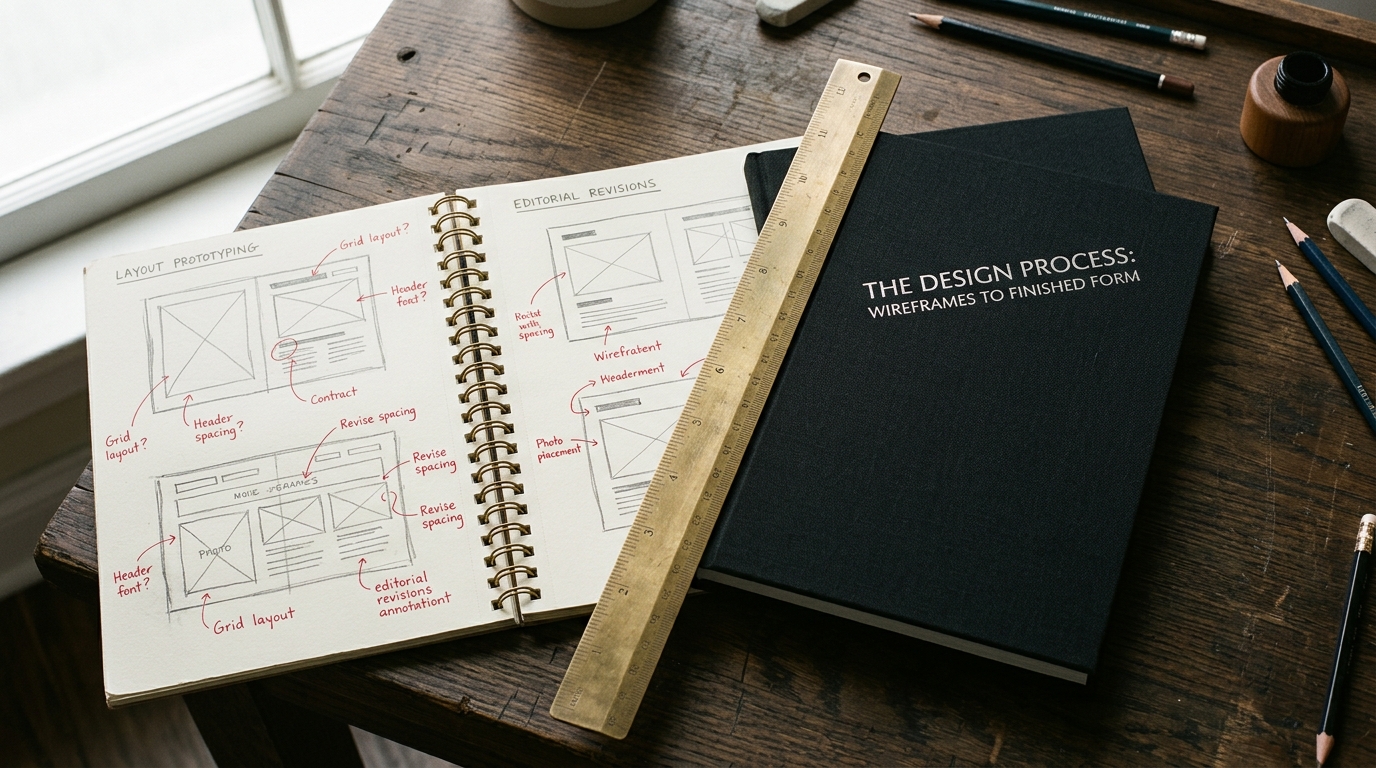
#### Showcase 5: The Editorial Canvas as an Arrangement of Ideas
Before an article reaches the screen, it is shaped through deliberate editorial choices. The authoring environment is an architectural drafting table where ideas and visual assets are organized into an uninterrupted reading flow.
## Visual Storytelling Is Editorial Work
There is a tendency in digital publishing to treat visual design as something that happens after the writing is finished.
The words are written first.
The visuals are added later.
The layout is adjusted at the end.
That approach works for some types of content, but it does not always reflect how people understand information.
A diagram can explain a relationship.
A photograph can provide evidence.
A chart can reveal a pattern.
A visual sequence can make a process easier to follow.
A carefully placed quotation can give a reader a moment to pause.
These are not merely decorative decisions. They influence comprehension.
ProdBlie therefore treats visual storytelling as part of the editorial process rather than an optional layer added after the fact.
#### Showcase 6: Optics, Framing, and Visual Evidence

Visual storytelling requires the same calibration and intentionality as prose. High-resolution visual evidence and carefully framed diagrams are not decorative accents; they are integral instruments of reader comprehension.
## Typography and the Reading Experience
Rich content only works when the reading experience remains coherent.
An article can contain excellent information and still feel difficult to read if its hierarchy is unclear, its spacing is inconsistent, or its visual elements compete for attention.
That is why typography matters.
Typography establishes rhythm.
Spacing creates pauses.
Hierarchy tells the reader what deserves attention first.
Contrast separates primary information from supporting information.
Visual restraint makes important elements more meaningful.
The goal is not visual noise. The goal is clarity.
ProdBlie's visual approach is built around that principle, using strong contrast, restrained accents, deliberate hierarchy, and generous spacing to create an environment where long-form content can remain engaging without becoming overwhelming.
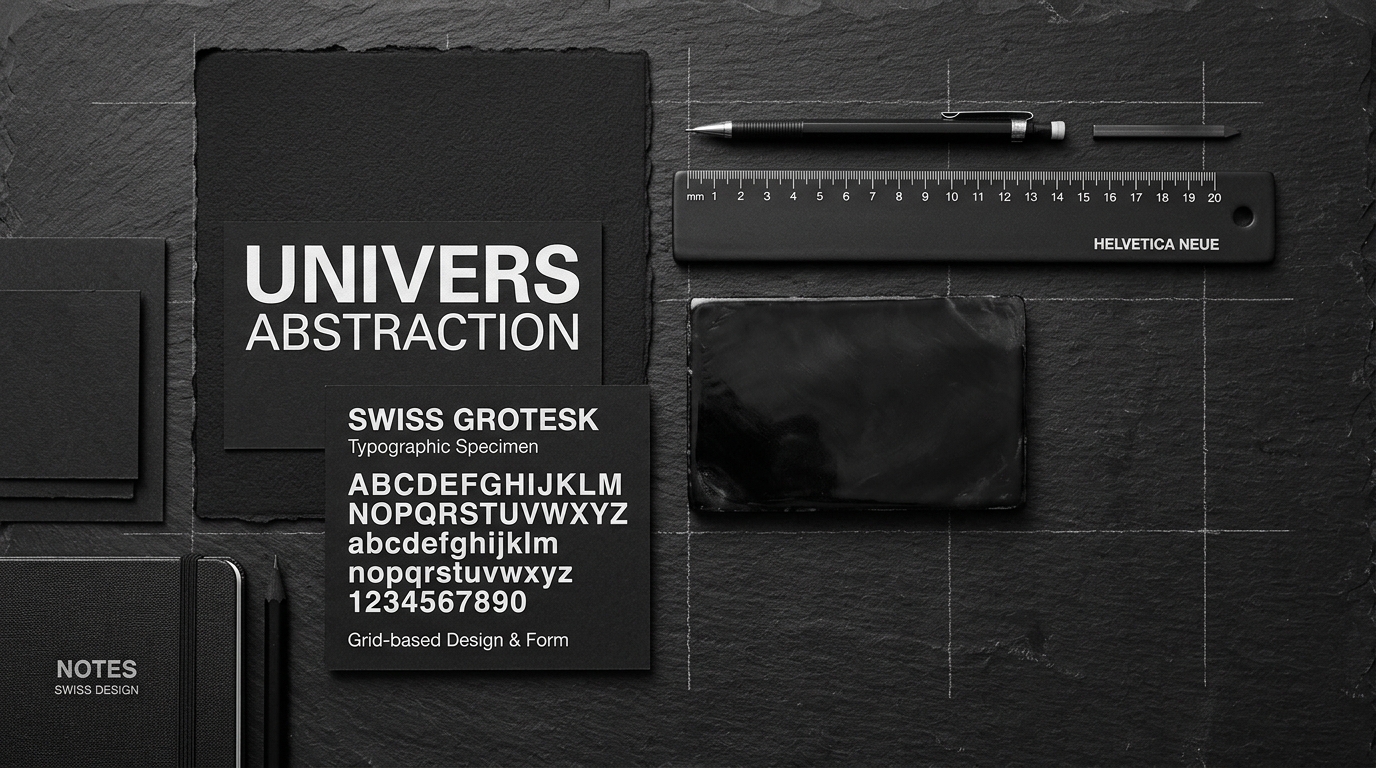
A publication should feel composed. The interface should support the information instead of competing with it.
#### Showcase 7: Typographic Precision and Visual Restraint

Typography establishes pacing and visual order. By pairing deliberate typographic scales with disciplined spacing, the reading experience stays serene, legible, and focused on the content.
**Foundational Principles of the ProdBlie Publishing Model:**
Three enduring principles define how ProdBlie balances editorial flexibility with typographic coherence.
- Structure Before Styling: Content should first be understood in terms of what it is. Only then should presentation become the focus. This creates a healthier relationship between content and design. When structure is clear, presentation becomes easier to reason about because the system already knows what kind of information it is working with. Instead of asking 'How can I make this paragraph look different?', the author can ask: 'What form would communicate this idea best?'
- Form Follows Information: Different types of thought require different modes of expression. An argument may begin in prose. A complex relationship may become a comparison. A process may become a sequence. A central insight may become a highlighted statement. An example may become a visual showcase. The publication becomes stronger when the form reflects the information rather than forcing every piece of information into the same container. Good publishing is not about using more components; it is about using the right ones.
- Respect for the Reading Experience: A digital publication exists for the reader. Every structural and visual decision eventually reaches the same question: Does this make the information easier to understand and experience? A block that looks impressive but adds confusion is not helping. The reading experience should feel deliberate. Readers should not have to understand how the publication was constructed in order to understand the publication itself. The underlying system should remain in the background; the ideas should remain in the foreground.
#### Showcase 8: Pacing, Balance, and Respect for Attention
A digital publication exists for the reader. Respecting the reading experience means eliminating visual frenzy, maintaining balanced pacing, and giving complex insights the quiet space they need to be absorbed.
## Building a Publication From Pieces
A modular article can be thought of as a sequence:
Idea → Structure → Blocks → Composition → Publication
The author begins with the subject. The subject becomes an editorial structure. That structure is expressed through blocks. The blocks are composed into a coherent sequence. The final result becomes a publication.
The important thing is that modularity does not mean fragmentation. A well-designed block system should make the publication feel more unified, not less. Each individual piece has a purpose, but every piece contributes to the same reading experience.
The article is therefore not a collection of widgets. It is a composition made from meaningful editorial elements.
#### Showcase 9: The Interlocking Mechanics of Composition

Like a mechanical escapement where each cog and jewel serves the movement of the whole, modular blocks function in concert to maintain the narrative momentum of the entire publication.
## Why Blocks Matter Beyond Design
At first glance, modular content can look like a design decision. But the deeper value is editorial.
Blocks create a vocabulary. They give authors a way to distinguish between different kinds of information. They allow a publication to communicate not only what it is saying, but also how the reader should understand the relationship between its parts .
That can make complicated material more approachable.
A long explanation becomes easier to scan.
A sequence becomes easier to follow.
A comparison becomes easier to evaluate.
A central idea becomes easier to remember.
A visual example becomes easier to connect with the surrounding narrative.
The block system therefore sits somewhere between editorial structure and interface design. It is part of both.
## Designing for Different Kinds of Information
Modern publishing covers an enormous range of material:
There are essays, analyses, research summaries, explanations, reports, guides, visual stories, comparisons, commentary, technical writing, and news-oriented articles.
No single content form is ideal for all of them. That is why flexibility matters.
ProdBlie is designed around the idea that a publishing platform should support different editorial forms without forcing everything into one rigid pattern. The structure of the publication can change according to the material. That flexibility is useful precisely because it is grounded in structure.
The author is not starting from an empty canvas with infinite possibilities. The author is working with a vocabulary designed around communication.
#### Showcase 10: Archival Permanence and Institutional Rigor

When publications are structured into durable schema models rather than ephemeral markup, editorial works can endure. ProdBlie treats every article as an archival volume built for long-term institutional value.
## What We Mean by Editorial Intelligence
The phrase editorial intelligence describes an idea at the center of ProdBlie's approach.
It is not simply about producing more content. It is about understanding that publishing involves decisions.
What should be emphasized?
What should be visual?
What should remain continuous prose?
Where should the reader pause?
Where does a comparison make more sense?
Where does a sequence make more sense?
Which information belongs together?
These are editorial questions. A publishing system can support those decisions by giving authors meaningful structural choices. That is where the idea of editorial intelligence comes in.
The intelligence is not in making the publication louder. It is in helping the publication become more intentional.
## Visuals Are Part of the Story
A visual element should earn its place. That means asking what it contributes.
Does it explain?
Does it provide evidence?
Does it create context?
Does it clarify a relationship?
Does it help the reader remember something?
Does it create a useful transition?
When the answer is yes, the visual becomes part of the editorial narrative. That is the kind of visual storytelling ProdBlie is designed to support. The purpose is not to turn every article into a highly animated experience. The purpose is to make richer forms of communication possible when the material calls for them.
Sometimes the most appropriate visual treatment is an image. Sometimes it is a structured comparison. Sometimes it is a simple sequence. Sometimes it is only typography. Good editorial design knows the difference.
## The First Publication Is Also a Demonstration
There is something important about building a publishing platform:
The platform is demonstrated by the publications created with it.
A description can explain what a system is capable of. A real publication can show it.
That is why this article is itself an example of the philosophy behind ProdBlie. Its structure moves between prose, visual storytelling, principles, explanations, and editorial emphasis. The intent is not simply to tell readers that ProdBlie supports structured publishing. The publication itself should make that idea visible.
A publishing platform is ultimately experienced through what it enables people to create.
## What ProdBlie Is
> [!NOTE] The Definition of ProdBlie
> At its core, ProdBlie is a digital publishing platform for structured, visually expressive editorial content. It is built around a block-based publishing model in which different types of information can be represented through different editorial structures. That means an article can contain more than paragraphs: it can contain purpose-built pieces of content that work together as a single publication.
**Core Pillars of ProdBlie:**
- Structured content: Information is organized into meaningful editorial units.
- Modular content blocks: Different types of information can take different forms.
- Visual storytelling: Images and visual structures can become part of the narrative.
- Editorial composition: Authors can organize ideas according to the needs of the subject.
- Reading-focused design: The final publication is treated as a reading experience, not simply a rendered document.
## What We Are Building Toward
Digital publishing will continue to evolve.
The amount of information people encounter will continue to increase. Readers will move between devices, formats, subjects, and levels of complexity. Authors will continue to look for better ways to explain things.
That means publishing systems need to evolve beyond the assumption that every piece of information should look roughly the same.
We believe the future of digital publishing should be more structured, not less. More expressive, without becoming chaotic. More visual, without becoming distracting. More flexible for authors, without becoming confusing for readers.
That is the direction we are exploring with ProdBlie. Not a publishing system that tries to make every publication look identical. And not a completely unconstrained canvas where structure disappears. Instead, a system where structure gives creativity a foundation.
## A Publishing Platform Built Around Ideas
The most important thing about a publishing platform is ultimately not the interface. It is what the interface allows an author to communicate.
That is the standard we use when thinking about ProdBlie.
A block matters because an idea needs it. A visual matters because it communicates something. A layout matters because it helps the reader understand. A structural decision matters because it improves the publication. Everything else is secondary.
ProdBlie exists to give digital publishing a richer vocabulary:
A vocabulary where information can move naturally between narrative, visual, analytical, editorial, and sequential forms.
A vocabulary where authors can compose rather than simply format.
And a vocabulary where the final publication can feel as deliberate as the ideas inside it.
#### Showcase 11: Resonance, Craft, and the Living Publication
The future of digital publishing unites the warmth of traditional editorial craftsmanship with the dynamic capabilities of modern software, amplifying human insight without sacrificing substance.
## Conclusion
Publishing has never been only about putting words on a page.
It has always been about deciding how ideas should be organized, presented, emphasized, and understood.
Digital publishing made distribution dramatically easier, but the underlying challenge remains: How should information take shape?
ProdBlie is our exploration of that question. By treating publications as structured compositions and giving authors a modular vocabulary of content blocks, we are building a publishing environment designed for richer editorial expression.
The philosophy is simple:
Structure before styling.
Form follows information.
Respect the reading experience.
When those principles work together, a publication becomes more than a document. It becomes an experience designed around the ideas it contains.
And that is what ProdBlie is building toward.
A better way to publish ideas for the digital world.
## Article Media Catalog
- **Article Cover Hero** (image): `/images/covers/prodblie-arch-cover.jpg` — *Alt*: "Inside ProdBlie: Building the Next-Generation Editorial Intelligence Platform"
- **The Discipline of Editorial Composition** (showcase): `/images/cms/showcase-1-ast.jpg` — *Alt*: "Letterpress metal type blocks in a vintage brass composing stick spelling out CRAFTSMANSHIP on dark chipped slate."
- **Refraction of Form: Giving Ideas Their Spectrum** (showcase): `/images/cms/showcase-2-sync.jpg` — *Alt*: "Optical glass dispersion prisms refracting amber and emerald light beams across raw slate beside an open deckle-edge notebook."
- **Deterministic Block Architecture** (showcase): `/images/cms/showcase-3-compression.jpg` — *Alt*: "Precision-milled basalt and smoked acrylic blocks fitted together with zero tolerance on blueprint grid paper."
- **Mapping the Editorial Topology** (showcase): `/images/cms/showcase-4-planning.jpg` — *Alt*: "Semi-translucent vellum cartographic projection map with copper pins and cream thread connecting nodes beside brass drafting dividers."
- **The Editorial Canvas as an Arrangement of Ideas** (showcase): `/images/cms/showcase-5-guardrails.jpg` — *Alt*: "Wire-bound layout sketchbook with pencil annotations and drafting grids beside an elegant black linen hardbound book and brass ruler."
- **Optics, Framing, and Visual Evidence** (showcase): `/images/cms/showcase-6-tenant.jpg` — *Alt*: "Disassembled optical bench with precision coated camera lens elements, brass vernier caliper, and optical glass filters on dark velvet."
- **Typographic Precision and Visual Restraint** (showcase): `/images/cms/showcase-7-knowledge.jpg` — *Alt*: "Overhead monochrome flat-lay of tactile matte black paper swatches, crisp white typography specimen cards with Swiss Grotesk typefaces, and a drafting ruler on slate."
- **Pacing, Balance, and Respect for Attention** (showcase): `/images/cms/showcase-8-schema.jpg` — *Alt*: "Smooth black obsidian balancing stones, vintage brass hourglass with golden sand, and raked dark charcoal zen sand patterns."
- **The Interlocking Mechanics of Composition** (showcase): `/images/cms/showcase-9-telemetry.jpg` — *Alt*: "Precision brass mechanical clockwork escapement mechanism with balanced counterweights and polished ruby jewel bearings on dark oiled gunmetal."
- **Archival Permanence and Institutional Rigor** (showcase): `/images/cms/showcase-10-resilience.jpg` — *Alt*: "Handcrafted leather-bound archival ledger, brass wax seal stamp with geometric cryptographic pattern, deep crimson wax seals, gold-nib fountain pen on dark stone."
- **Resonance, Craft, and the Living Publication** (showcase): `/images/cms/showcase-11-edge.jpg` — *Alt*: "Glowing warm amber vintage vacuum tube and quartz crystal resonator mounted on a machined dark anodized aluminum base."
Most digital publishing still begins with the same basic assumption: an article is a page of text.
A title is added, paragraphs follow, perhaps an image is inserted somewhere in between, and the publishing system determines how everything should appear on the screen.
That model works well for simple writing.
It becomes less convincing when the information itself becomes more complex.
A research finding may need a visual explanation. A process may be easier to understand as a sequence. A comparison may deserve its own structure. An important conclusion may need emphasis rather than another paragraph. A visual example may communicate something that several paragraphs cannot.
This is the problem ProdBlie was designed to explore.
ProdBlie is a digital publishing platform built around structured content and modular content blocks. It is designed for editorial work that goes beyond plain text, giving different kinds of information the ability to take different forms within the same publication.
Instead of treating an article as a single continuous document, ProdBlie approaches a publication as a composition of purposeful pieces.
Text can remain text. A comparison can become a comparison. A visual explanation can become a visual block. A sequence can become a progression. An editorial highlight can stand on its own.
The goal is not to make publishing more complicated. The goal is to give authors a better vocabulary for expressing ideas.
This article explains the thinking behind that approach, how ProdBlie treats content, why blocks matter, and what we believe a modern digital reading experience should feel like.
The Evolution of Editorial Craft
Before digital publishing, editorial work was inseparable from physical composition.
Printers worked with letters, spacing, columns, images, captions, rules, and page structures. Every element had a role. A publication was not simply a collection of words. It was an arrangement of information.
That physical process naturally encouraged structure.
A headline had a place. A photograph had a place. A caption had a place. A quotation, table, illustration, or diagram had a place.
Digital publishing removed much of that physical constraint, which created enormous flexibility. But flexibility also introduced a different problem.
When almost anything can be placed almost anywhere, structure can become invisible.
ProdBlie takes inspiration from the discipline of earlier editorial systems without attempting to recreate the limitations of print.
The idea is simple:
Content should have structure before it has styling.
An author should be able to think about what a piece of information is before thinking about how it should be decorated.
That distinction matters because the meaning of content is not always contained in the words themselves. Sometimes the form in which those words appear is part of the explanation.
The Discipline of Editorial Composition
Before digital publishing, every letter, column, and rule had a deliberate place in physical space. ProdBlie applies that structural discipline to the digital canvas, enabling ideas to take deliberate, meaningful form without the constraints of print.
Why Structured Content Matters
A conventional article editor often treats content as a continuous stream.
That makes writing familiar and approachable, but it can make richer editorial work unnecessarily difficult.
An image becomes something inserted between paragraphs. A comparison becomes a manually formatted collection of text. A step-by-step explanation becomes a list. A key conclusion becomes bold text.
The information is still there, but the publishing system does not necessarily understand the difference between the pieces.
ProdBlie approaches the problem differently.
An article can be composed from structured content blocks, with each block representing a particular editorial purpose.
The result is a publication where structure is part of the content model rather than something added only at the presentation layer.
The Core Premise of ProdBlie
Information deserves the form it needs. That principle sits at the center of the ProdBlie publishing model. A paragraph is useful because some ideas are best expressed as prose. A visual block is useful because some ideas are easier to understand when they can be seen. A comparison is useful because relationships become clearer when information can be considered side by side. A sequence is useful because order itself carries meaning. Structured publishing simply gives those differences somewhere to live.
Refraction of Form: Giving Ideas Their Spectrum
Just as an optical prism separates white light into distinct wavelengths, a structured publishing system separates uniform text into specialized, purposeful expressions, ranging from analytical matrices to evocative visual evidence.
The Anatomy of a Content Block
A content block is more than a visual container.
It represents a particular way of communicating information.
That distinction is important. The purpose of a block is not simply to make a page look more interesting. Its purpose is to give an idea an appropriate editorial form.
A publication might move naturally through several different modes of communication:
Modes of Editorial Communication
Narrative: A sustained explanation where prose is the most natural medium.
Visual: A piece of information where imagery, diagrams, or visual evidence communicates more effectively than text alone.
Analytical: A comparison, matrix, table, or structured evaluation where relationships between elements matter.
Editorial: A highlighted observation, key takeaway, quotation, or contextual aside that deserves visual emphasis.
Sequential: A process, set of stages, or ordered explanation where progression is part of the meaning.
These forms do not compete with one another. They work together. A strong publication can move from one to another when the subject requires it.
Deterministic Block Architecture
Each block in ProdBlie adheres to a validated schema contract. Whether rendering an in-depth visual showcase, an editorial aside, or an analytical matrix, modularity ensures deterministic layout and responsive fidelity across every viewport.
A Different Way to Think About the Article
The most useful way to think about a ProdBlie article is not as a document containing many formatting options.
It is better understood as a composition.
The author begins with an idea.
That idea becomes an argument, explanation, report, story, or analysis.
The content is then organized into the forms that communicate each part most effectively.
One section may need three paragraphs. Another may need an image. Another may need a comparison. Another may need a concise highlighted conclusion. Another may need a sequence of steps.
The result is still one publication. But internally, it has a richer structure. That structure creates a bridge between editorial thinking and visual presentation.
Mapping the Editorial Topology
Approaching an article as a composition means mapping the relational paths between ideas. Order, distance, and pacing are deliberately choreographed to guide the reader through multifaceted subjects without cognitive disorientation.
Giving Information the Form It Needs
Not every piece of knowledge behaves the same way.
Consider a simple explanation:
A writer introduces an idea, defines it, and explains why it matters. Prose is probably enough.
Now consider a process:
Research begins with observation, moves through evaluation, and ends in a published conclusion. A sequence makes more sense.
Now consider a comparison between several approaches. A structured analytical presentation may be easier to understand than several paragraphs describing the same relationships.
And consider a key insight that the reader should remember. A highlighted editorial block can give that idea the space it deserves.
The underlying principle remains the same in every case: The form should support the information.
That is why a block system is useful. It gives authors more than formatting choices. It gives them editorial choices.
The Thoughtful Editorial Canvas
Publishing also involves a quieter part of the process.
Before something becomes a finished publication, someone has to decide what belongs where.
Ideas must be organized. Sections must be shaped. Images must be selected. Important observations must be separated from supporting detail. Transitions must make sense. The reading experience has to work as a whole.
ProdBlie treats that organization as part of editorial craft.
The publishing canvas is not simply a place to fill fields. It is a place to assemble an argument, a narrative, or a body of information.
The block system supports that process by allowing the author to compose a publication from distinct pieces while still thinking about the publication as one continuous experience.
This creates an important separation:
Authors decide what the publication needs. The publishing system provides the structures that make those decisions possible.
The Editorial Canvas as an Arrangement of Ideas
Before an article reaches the screen, it is shaped through deliberate editorial choices. The authoring environment is an architectural drafting table where ideas and visual assets are organized into an uninterrupted reading flow.
Visual Storytelling Is Editorial Work
There is a tendency in digital publishing to treat visual design as something that happens after the writing is finished.
The words are written first. The visuals are added later. The layout is adjusted at the end.
That approach works for some types of content, but it does not always reflect how people understand information.
A diagram can explain a relationship. A photograph can provide evidence. A chart can reveal a pattern. A visual sequence can make a process easier to follow. A carefully placed quotation can give a reader a moment to pause.
These are not merely decorative decisions. They influence comprehension.
ProdBlie therefore treats visual storytelling as part of the editorial process rather than an optional layer added after the fact.
Optics, Framing, and Visual Evidence
Visual storytelling requires the same calibration and intentionality as prose. High-resolution visual evidence and carefully framed diagrams are not decorative accents; they are integral instruments of reader comprehension.
Typography and the Reading Experience
Rich content only works when the reading experience remains coherent.
An article can contain excellent information and still feel difficult to read if its hierarchy is unclear, its spacing is inconsistent, or its visual elements compete for attention.
That is why typography matters.
Typography establishes rhythm. Spacing creates pauses. Hierarchy tells the reader what deserves attention first. Contrast separates primary information from supporting information. Visual restraint makes important elements more meaningful.
The goal is not visual noise. The goal is clarity.
ProdBlie's visual approach is built around that principle, using strong contrast, restrained accents, deliberate hierarchy, and generous spacing to create an environment where long-form content can remain engaging without becoming overwhelming.
A publication should feel composed. The interface should support the information instead of competing with it.
Typographic Precision and Visual Restraint
Typography establishes pacing and visual order. By pairing deliberate typographic scales with disciplined spacing, the reading experience stays serene, legible, and focused on the content.
Foundational Principles of the ProdBlie Publishing Model
Three enduring principles define how ProdBlie balances editorial flexibility with typographic coherence.
Structure Before Styling
Content should first be understood in terms of what it is. Only then should presentation become the focus. This creates a healthier relationship between content and design.
When structure is clear, presentation becomes easier to reason about because the system already knows what kind of information it is working with. Instead of asking 'How can I make this paragraph look different?', the author can ask: 'What form would communicate this idea best?'
Form Follows Information
Different types of thought require different modes of expression. An argument may begin in prose. A complex relationship may become a comparison. A process may become a sequence. A central insight may become a highlighted statement. An example may become a visual showcase.
The publication becomes stronger when the form reflects the information rather than forcing every piece of information into the same container. Good publishing is not about using more components; it is about using the right ones.
Respect for the Reading Experience
A digital publication exists for the reader. Every structural and visual decision eventually reaches the same question: Does this make the information easier to understand and experience?
A block that looks impressive but adds confusion is not helping. The reading experience should feel deliberate. Readers should not have to understand how the publication was constructed in order to understand the publication itself. The underlying system should remain in the background; the ideas should remain in the foreground.
Pacing, Balance, and Respect for Attention
A digital publication exists for the reader. Respecting the reading experience means eliminating visual frenzy, maintaining balanced pacing, and giving complex insights the quiet space they need to be absorbed.
Building a Publication From Pieces
A modular article can be thought of as a sequence:
Idea → Structure → Blocks → Composition → Publication
The author begins with the subject. The subject becomes an editorial structure. That structure is expressed through blocks. The blocks are composed into a coherent sequence. The final result becomes a publication.
The important thing is that modularity does not mean fragmentation. A well-designed block system should make the publication feel more unified, not less. Each individual piece has a purpose, but every piece contributes to the same reading experience.
The article is therefore not a collection of widgets. It is a composition made from meaningful editorial elements.
The Interlocking Mechanics of Composition
Like a mechanical escapement where each cog and jewel serves the movement of the whole, modular blocks function in concert to maintain the narrative momentum of the entire publication.
Why Blocks Matter Beyond Design
At first glance, modular content can look like a design decision. But the deeper value is editorial.
Blocks create a vocabulary. They give authors a way to distinguish between different kinds of information. They allow a publication to communicate not only what it is saying, but also how the reader should understand the relationship between its parts.
That can make complicated material more approachable.
A long explanation becomes easier to scan. A sequence becomes easier to follow. A comparison becomes easier to evaluate. A central idea becomes easier to remember. A visual example becomes easier to connect with the surrounding narrative.
The block system therefore sits somewhere between editorial structure and interface design. It is part of both.
Designing for Different Kinds of Information
Modern publishing covers an enormous range of material:
There are essays, analyses, research summaries, explanations, reports, guides, visual stories, comparisons, commentary, technical writing, and news-oriented articles.
No single content form is ideal for all of them. That is why flexibility matters.
ProdBlie is designed around the idea that a publishing platform should support different editorial forms without forcing everything into one rigid pattern. The structure of the publication can change according to the material. That flexibility is useful precisely because it is grounded in structure.
The author is not starting from an empty canvas with infinite possibilities. The author is working with a vocabulary designed around communication.
Archival Permanence and Institutional Rigor
When publications are structured into durable schema models rather than ephemeral markup, editorial works can endure. ProdBlie treats every article as an archival volume built for long-term institutional value.
What We Mean by Editorial Intelligence
The phrase editorial intelligence describes an idea at the center of ProdBlie's approach.
It is not simply about producing more content. It is about understanding that publishing involves decisions.
What should be emphasized? What should be visual? What should remain continuous prose? Where should the reader pause? Where does a comparison make more sense? Where does a sequence make more sense? Which information belongs together?
These are editorial questions. A publishing system can support those decisions by giving authors meaningful structural choices. That is where the idea of editorial intelligence comes in.
The intelligence is not in making the publication louder. It is in helping the publication become more intentional.
Visuals Are Part of the Story
A visual element should earn its place. That means asking what it contributes.
Does it explain? Does it provide evidence? Does it create context? Does it clarify a relationship? Does it help the reader remember something? Does it create a useful transition?
When the answer is yes, the visual becomes part of the editorial narrative. That is the kind of visual storytelling ProdBlie is designed to support. The purpose is not to turn every article into a highly animated experience. The purpose is to make richer forms of communication possible when the material calls for them.
Sometimes the most appropriate visual treatment is an image. Sometimes it is a structured comparison. Sometimes it is a simple sequence. Sometimes it is only typography. Good editorial design knows the difference.
The First Publication Is Also a Demonstration
There is something important about building a publishing platform:
The platform is demonstrated by the publications created with it.
A description can explain what a system is capable of. A real publication can show it.
That is why this article is itself an example of the philosophy behind ProdBlie. Its structure moves between prose, visual storytelling, principles, explanations, and editorial emphasis. The intent is not simply to tell readers that ProdBlie supports structured publishing. The publication itself should make that idea visible.
A publishing platform is ultimately experienced through what it enables people to create.
What ProdBlie Is
The Definition of ProdBlie
At its core, ProdBlie is a digital publishing platform for structured, visually expressive editorial content. It is built around a block-based publishing model in which different types of information can be represented through different editorial structures. That means an article can contain more than paragraphs: it can contain purpose-built pieces of content that work together as a single publication.
Core Pillars of ProdBlie
Structured content: Information is organized into meaningful editorial units.
Modular content blocks: Different types of information can take different forms.
Visual storytelling: Images and visual structures can become part of the narrative.
Editorial composition: Authors can organize ideas according to the needs of the subject.
Reading-focused design: The final publication is treated as a reading experience, not simply a rendered document.
What We Are Building Toward
Digital publishing will continue to evolve.
The amount of information people encounter will continue to increase. Readers will move between devices, formats, subjects, and levels of complexity. Authors will continue to look for better ways to explain things.
That means publishing systems need to evolve beyond the assumption that every piece of information should look roughly the same.
We believe the future of digital publishing should be more structured, not less. More expressive, without becoming chaotic. More visual, without becoming distracting. More flexible for authors, without becoming confusing for readers.
That is the direction we are exploring with ProdBlie. Not a publishing system that tries to make every publication look identical. And not a completely unconstrained canvas where structure disappears. Instead, a system where structure gives creativity a foundation.
A Publishing Platform Built Around Ideas
The most important thing about a publishing platform is ultimately not the interface. It is what the interface allows an author to communicate.
That is the standard we use when thinking about ProdBlie.
A block matters because an idea needs it. A visual matters because it communicates something. A layout matters because it helps the reader understand. A structural decision matters because it improves the publication. Everything else is secondary.
ProdBlie exists to give digital publishing a richer vocabulary:
A vocabulary where information can move naturally between narrative, visual, analytical, editorial, and sequential forms. A vocabulary where authors can compose rather than simply format. And a vocabulary where the final publication can feel as deliberate as the ideas inside it.
Resonance, Craft, and the Living Publication
The future of digital publishing unites the warmth of traditional editorial craftsmanship with the dynamic capabilities of modern software, amplifying human insight without sacrificing substance.
Conclusion
Publishing has never been only about putting words on a page.
It has always been about deciding how ideas should be organized, presented, emphasized, and understood.
Digital publishing made distribution dramatically easier, but the underlying challenge remains: How should information take shape?
ProdBlie is our exploration of that question. By treating publications as structured compositions and giving authors a modular vocabulary of content blocks, we are building a publishing environment designed for richer editorial expression.
The philosophy is simple:
Structure before styling. Form follows information. Respect the reading experience.
When those principles work together, a publication becomes more than a document. It becomes an experience designed around the ideas it contains.
And that is what ProdBlie is building toward.
A better way to publish ideas for the digital world.